
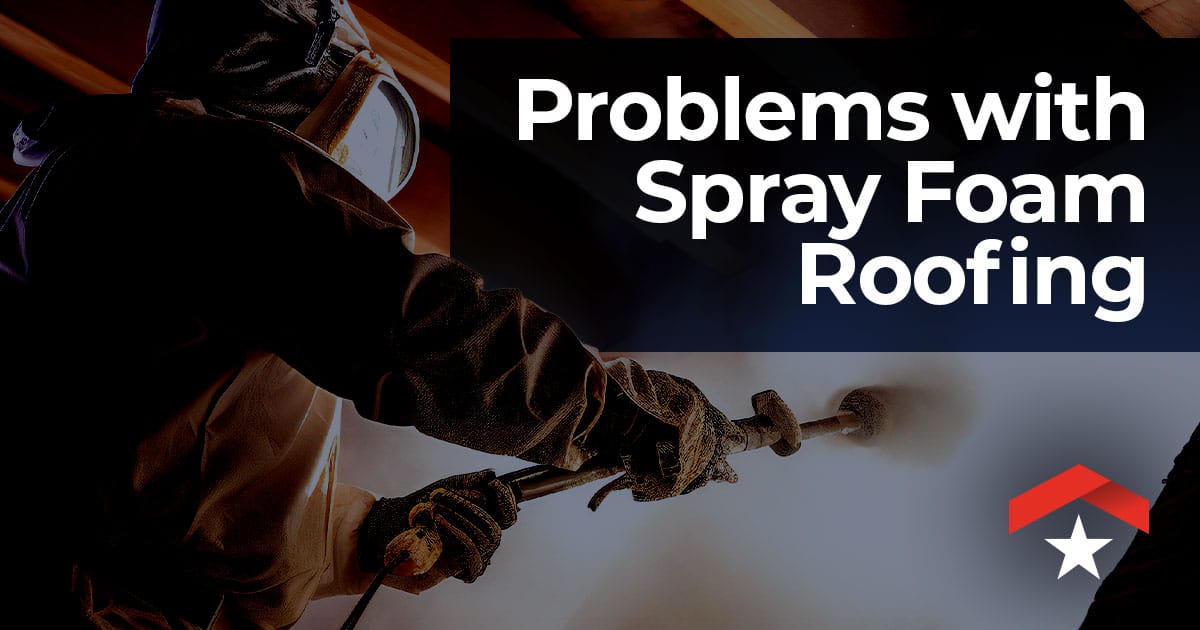
Spray foam roofing problems on a pre-engineered metal building trace back to one point of failure: the foam is not watertight, so the whole system depends on a silicone topcoat that Florida heat, humidity, and UV wear out early. Once that coating goes, leaks become untraceable, moisture stays trapped against your steel, and your next roof project gets far more expensive.
The seven most common spray foam roofing problems on a Central Florida PEMB:
- Silicone topcoats degrade early in sustained Florida heat and UV
- Leaks travel sideways through the foam and become nearly impossible to trace
- Trapped moisture accelerates corrosion of roof panels and structural steel
- Foam removal adds weeks of labor to any future roof replacement
- Foam gives rodents a material they can tunnel into and nest inside
- Foam eliminates the versatility that makes a metal building worth owning
- The finished appearance rarely helps property value or tenant appeal
Our crews are regularly called in to strip failed SPF off metal buildings before a roof-over or PEMB restoration can begin. Here is what owners and facility managers should know first.
What Is Spray Polyurethane Foam Roofing?
Spray polyurethane foam roofing is a liquid applied over an existing roof deck or metal panel system, where it expands into a rigid foam layer and is sealed with a topcoat, almost always silicone. The foam provides insulation and slope. The coating, not the foam, provides the waterproofing.
SPF comes in two types:
- Open-cell foam is softer, lighter, and vapor-permeable, but holds water once breached.
- Closed-cell foam is denser and more water-resistant, but heavier and costlier to install.
Neither type is watertight. That dependency on a sacrificial topcoat is where most spray foam roofing problems begin.
What Are the Most Common Spray Foam Roofing Problems?
Silicone Coatings Fail Early in Florida Heat and Humidity
Silicone topcoats lose performance faster in hot, high-UV climates than ratings suggest. Sustained heat causes silicone over-softening and adhesion loss, a documented failure mode identified by the Roof Coating Authority. On Central Florida buildings, our crews routinely find coatings needing a recoat within 6 to 18 months, not the 10-plus years advertised.
Leaks Become Nearly Impossible to Trace
SPF is applied as one seamless layer, so water entering a single breach travels laterally for several feet before appearing inside. Water moves unseen between the deck and the foam, making it nearly impossible to identify the true source of a leak, as documented by Pioneer Roofing Company.
Trapped Moisture Accelerates Corrosion of the Building
Once water gets under a failed coating, saturated foam holds it against metal panels and structural steel instead of letting the assembly dry. Prolonged trapped moisture produces hidden structural deterioration and mold growth typically found only after significant damage, per Pioneer Roofing Company. On a PEMB, those are the panels and frame the building depends on structurally.
Foam Removal Adds Weeks to Your Next Roof Project
SPF is fully adhered and seamless, so it cannot be pulled up in sheets like a conventional roof cover. It must be scraped and ground off the panels. Roof Over America crews have spent weeks removing foam before a standard metal roof-over or wall panel replacement could start, and that labor is billed on top of the new roof.
Spray Foam Gives Rodents a Place to Nest
Batt insulation offers little structure for a rodent to burrow into and hold open. Foam does. Rodents tunnel directly into foam, including documented cases of tunnels more than a foot long carved into closed-cell foam, as reported on GreenBuildingAdvisor. For a warehouse already managing pest control, foam becomes the most attractive nesting site in the building.
Foam Eliminates the Versatility of a Metal Building
A PEMB earns its value by being easy to change. Bays get added, dock doors and windows get cut in, damaged panels get swapped individually, and equipment gets hung from the purlins. Spray foam bonds panels, fasteners, and framing into one continuous mass, so each of those routine modifications becomes a demolition job first.
The Finished Appearance Rarely Helps Property Value
Spray foam cures to a rough, uneven surface that reads as a patch rather than a finished roof. A factory-finished panel system or a clean white or black VRR-faced retrofit presents far better to tenants, buyers, and appraisers.
Is Open Cell or Closed Cell Foam Better for a Metal Building?
Closed-cell foam resists water intrusion better, but the distinction matters less than contractors suggest, because both rely on the same vulnerable topcoat. The Insurance Institute for Business & Home Safety notes SPF degrades under UV and that coatings need reapplication every 10 to 20 years under favorable conditions. Central Florida conditions are not favorable, which shortens that window regardless of type.
Is Spray Foam a Good Interior Insulation for a PEMB?
Spray foam is also sold as an interior upgrade, sprayed on the underside of the roof and walls to raise R-value. It is not exposed to weather there, but most of the problems above still apply. Foam conceals panels and fasteners, so a leak above it stays hidden. It holds condensation against the steel. It gives rodents somewhere to nest. And it seals the building against future modification.
A VRR-faced batt insulation retrofit suits a metal building better. Metal bands, adhesive tape, and rolled batts take longer to install than spraying foam from a gun, but the result delivers the thermal performance without burying the structure, and it can be opened and put back whenever the building changes. Spray foam belongs in concealed cavities on conventional construction, not inside a PEMB.
How Do You Know If Your SPF Coating Is Failing?
Watch for these warning signs:
- Chalking, cracking, blistering, or thinning of the silicone surface
- Soft or spongy spots underfoot, indicating saturated foam
- Interior staining with no obvious source above it
- Yellowed or crumbling foam where the coating has worn through
- Rust bleeding at fasteners, seams, or panel edges below the foam line
Any one of these means the system is no longer protecting the pre-engineered metal building underneath.
What Are the Alternatives to Spray Foam on a PEMB?
| System | How It Stays Watertight | Expected Service Life | Effect on Future Roof Work |
|---|---|---|---|
| SPF with silicone coating | Sacrificial topcoat over foam | Tied to recoat cycle, shortened by Florida heat and UV | Must be removed first, adding weeks of labor and disposal |
| Metal roof-over | New 26-gauge Galvalume Plus panels on a 16-gauge sub-girt frame | 30 years or more, backed by a 25-year manufacturer warranty | Existing roof stays in place, no tear-off required |
| PEMB ReSkin | New factory-finished exterior panels | Decades, with original structure retained | Panels replaced directly, structure preserved |
If your coating is intact, inspection and timely recoating buys time. If it has failed, recoating a compromised system rarely pays off. We covered that decision in our guide to choosing restoration over replacement for a Central Florida PEMB.
Frequently Asked Questions
Is spray foam roofing good for metal buildings in Florida? It offers short-term insulation and leak resistance, but performance depends on a silicone topcoat that degrades fast in Florida heat and UV. On a PEMB, the long-term risk to the panels and frame outweighs the upfront savings.
Can you use spray foam insulation inside a metal building? You can, but it carries most of the same drawbacks indoors. Foam hides leaks and fasteners, traps condensation against the steel, gives rodents a place to nest, and blocks future modification. A VRR-faced batt retrofit delivers the R-value while keeping the structure accessible.
How often does a spray foam roof need recoating in Florida? The Insurance Institute for Business & Home Safety puts typical recoat intervals at 10 to 20 years under favorable conditions. Central Florida owners frequently see coatings fail far sooner, often within 6 to 18 months, because of intense UV and sustained heat.
Can you find a leak in a spray foam roof? It is difficult. Because the foam is seamless, water entering one breach travels laterally before showing inside, so the interior drip location rarely indicates the entry point. Finding it often requires moisture scanning or removing foam.
Is it expensive to remove spray foam before installing a new roof? Yes. Because SPF is fully adhered and seamless, it must be scraped or ground off before new panels can go on. That adds days or weeks of labor plus disposal cost to what would otherwise be a straightforward roof-over.
If your PEMB has spray foam that is starting to fail, or you are weighing an SPF proposal against a longer-lasting option, do not wait until hidden corrosion forces the decision for you. Contact Roof Over America for a roof assessment and a straight recommendation built around Central Florida’s climate.
Get Started
Related Posts
Categories
Get STarted
"*" indicates required fields