
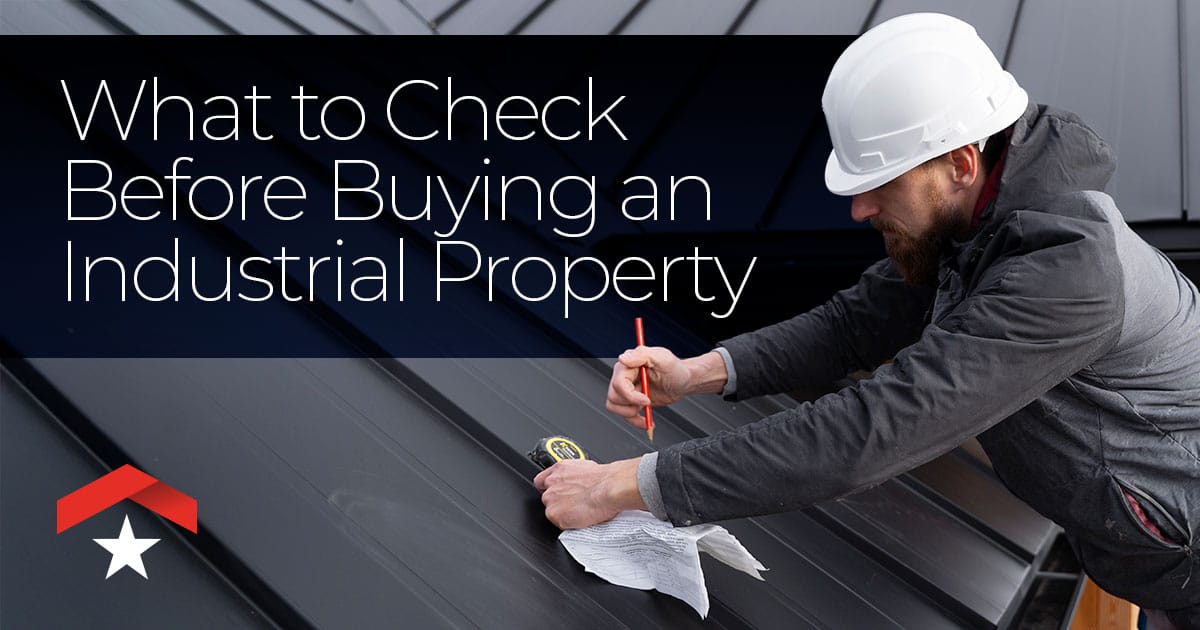
A PEMB roof inspection before buying a Central Florida industrial property is the one piece of due diligence that most reliably separates a sound acquisition from an unbudgeted capital expense in year one. Pre-engineered metal buildings make up a large share of the warehouse, distribution, and light manufacturing inventory across Orange, Seminole, Osceola, Polk, Lake, and Brevard counties, and on nearly every one of those assets the roof is the most expensive single component of the building envelope.
The inspection period is also the only window in the entire transaction when roof condition still has leverage attached to it. Once the deal closes, a failing roof is simply an operating problem. Before closing, it is a negotiating position, a credit, or a walk-away. Buyers, brokers, and property managers who know what to look at during that window consistently protect more value than those who rely on a general assessment alone.
Why a PEMB Roof Inspection Before Buying Is Different From a Standard Roof Review
Metal building roofs fail differently than built-up or membrane roofs, and the diagnostic signals are not interchangeable. A through-fastened metal panel system can look serviceable from the parking lot while the fastener gaskets that hold it watertight have been failing for a decade. Corrosion frequently begins at the underside of the panel or inside the seam, where a visual walk from above reveals nothing.
Most acquisitions include a property condition assessment performed under ASTM E2018, the baseline property condition assessment guide that ASTM identifies as the most cited standard in the country for transactional scopes of work supporting commercial real estate acquisitions and capital planning. The current E2018-24 revision took effect at the start of 2024. That assessment is genuinely useful, but it is broad by design, covering a visual evaluation of primary building systems across an entire facility. The roof receives a fraction of the total attention.
On a pre-engineered metal building, that generalist pass is rarely enough to price the asset correctly. A specialist review of the roof assembly runs alongside the property condition assessment, not instead of it.
What to Inspect on the Panels and Coating
Start with the roof covering itself, because panel condition governs whether the building is a candidate for restoration or a full replacement.
- Red rust versus surface staining. Light surface discoloration is cosmetic. Red rust that has perforated the panel, particularly at laps and low points, indicates the protective coating is fully consumed.
- Chalking and coating loss. Run a hand across a painted panel. Heavy residue means the finish has oxidized and is no longer shedding water or reflecting heat effectively.
- Oil canning and panel deformation. Waviness is often cosmetic, but pronounced deformation near supports can point to thermal movement the system was never detailed to absorb.
- Prior repairs. Sealant smears, patch plates, and mastic tape across seams are a map of where the roof has already failed. Photograph every one.
- Existing recover layers. Determine whether the roof has already received a previous roof-over. A building that has been recovered once has less remaining capacity for another.
What to Inspect on Fasteners, Seams, and Penetrations
Water rarely enters a metal roof through the middle of a panel. It enters at the connections.
- Backed-out or spinning fasteners. Screws that have worked loose through years of thermal cycling leave an open path directly into the building.
- Compressed or missing gaskets. Neoprene washers harden and split under Central Florida sun exposure long before the panel itself fails.
- Seam separation and sealant condition. Check side laps and end laps for gaps, hardened butyl, and evidence of capillary draw.
- Curbs and equipment penetrations. Rooftop units, exhaust fans, and conduit supports are the most common leak sources on industrial PEMBs. Look for improvised flashing and units set directly on panel ribs.
- Translucent and skylight panels. Aged fiberglass panels are both a leak source and a serious fall hazard. Note their age and condition, and never step on one.
What to Inspect on the Structure and Interior
The frame determines what the building can accept as a remedy, and the interior tells the truth about the roof above it.
- Purlin and frame corrosion. Inspect from inside at the eave, valley, and any area below a known leak. Section loss at the purlin changes the engineering conversation entirely.
- Fastener staining on the deck side. Rust trails on the underside of panels mark active water entry even when nothing is dripping at the time of inspection.
- Daylight at seams and eaves. Visible light from inside a darkened building is the fastest leak survey available.
- Water staining on inventory, racking, and slab. Tenants often work around chronic leaks rather than reporting them.
- Insulation condition. Compressed, sagging, or stained blanket insulation indicates sustained moisture and lost thermal performance.
- Drainage and gutters. Undersized gutters, crushed downspouts, and standing water at low points accelerate corrosion faster than almost any other factor in Florida’s rainfall pattern.
- Eave strut condition. Pay special attention to the eave strut. If gutter and downspout systems are neglected, debris buildup can cause water to back up and corrode the eave strut, which is a critical—and often overlooked—structural component that can become a significant, hidden capital expense.
The Metal Building Manufacturers Association publishes design and retrofit guidance covering roof framing systems, retrofit methods, and coating limitations, and it is a useful reference when interpreting what an inspection turns up on an older metal building system.
Documents to Request During the Inspection Period
Physical observation answers half the question. The file answers the rest.
- Original building drawings, including the metal building manufacturer’s order documents if available
- Permit history for all roof work, which reveals whether prior repairs were permitted and inspected
- Existing panel and fastener warranties, plus any documentation of transferability to a new owner
- Roof maintenance and repair invoices for the prior five to ten years
- Insurance loss runs showing any prior water intrusion or wind claims
- Tenant complaint logs, which frequently document leaks that never generated a work order
Warranty transferability deserves particular attention. Many metal roof warranties do not survive a change in ownership automatically, and discovering that after closing removes a remedy the buyer assumed was part of the asset.
How Roof Condition Affects Code Exposure and Insurability
A PEMB roof inspection before buying should also account for regulatory timing, because roof work in Florida is governed by code provisions that determine how much of the roof can be repaired before the entire system must be brought up to current standards. Central Florida currently operates under the 8th Edition of the Florida Building Code, with the 9th Edition scheduled to take effect December 31, 2026. Permit timing relative to that transition can meaningfully change the scope and engineering requirements of planned roof work, a subject covered in more depth in our guide to Florida Building Code compliance for aging PEMBs.
Insurability is the second exposure. Florida commercial carriers increasingly underwrite to roof age and documented condition. A buyer who closes on a building with an undocumented, visibly deteriorated roof may find that coverage terms at renewal look nothing like the terms in the seller’s current policy.
Turning Inspection Findings Into a Negotiating Position
Findings are only valuable if they convert into something actionable before closing. In practice, a well-documented roof assessment supports one of four outcomes: a price reduction, a seller credit held at closing, a seller-completed repair as a condition of sale, or a decision to walk away from a building whose structure will not support an economical remedy.
The critical distinction is whether the building needs a covering solution or a structural one. When the frame and purlins remain sound, and the panels have simply reached the end of their service life, a metal roof-over is often the most practical path, because it installs over the existing roof without tear-off and without shutting down operations. When panel deterioration extends across walls, or specific components have failed, targeted PEMB restoration work addresses the deficiencies without the cost of full reconstruction. Knowing which category a building falls into before closing lets a buyer underwrite the number instead of guessing at it.
Bring that assessment forward in the timeline. Roof findings that surface in the final days of an inspection period rarely produce a favorable renegotiation, because the seller knows the buyer is out of time.
If you are evaluating a Central Florida industrial property and need the roof assessed by a contractor who works on metal buildings every day, Roof Over America has served building owners across all of Central Florida’s counties since 1983. Call (407) 607-9135 or contact our team to schedule a due diligence roof assessment while you still have leverage in the transaction.
Get Started
Related Posts
Categories
Get STarted
"*" indicates required fields